





LOC and LCO Method: The Long-Lasting Hydration Technique for Textured Hair
If your curls drink up moisture only to turn dry again a few hours later, it's neither inevitable nor a flaw in your hair. It's a question of application method. The LOC method (Liquid → Oil → Cream) and its LCO variant (Liquid → Cream → Oil) are two product-layering techniques that extend hydration for several days on textured hair. You just need to choose the right one for your porosity. Here's everything you need to know.
Why textured hair needs a specific hydration method
Wavy, curly, loose coily and tight coily hair share one structural feature: the sebum produced at the scalp travels with difficulty down the strand because of the bends in the hair shaft. The tighter the texture, the less the strand is naturally nourished. That's why textured hair is drier than straight hair: dryness is a characteristic, not a flaw.
Applying a single moisturising product therefore isn't enough: water evaporates within a few hours if nothing "seals" it into the strand. That's exactly what the LOC and LCO methods solve, by layering three complementary textures.
The LOC method: Liquid, Oil, Cream
The LOC method unfolds in three stages, in this precise order.
L — Liquid (hydration)
The Liquid step delivers water, the strand's fundamental nutrient. Use a leave-in (a no-rinse treatment) or a hydrating spray applied to very wet hair — never dry. At Les Secrets de Loly, four leave-ins cover every texture:
- Kurl Potion: a light leave-in, perfect for fine, wavy and curly hair.
- Kurl Nectar: rich in nourishing and moisturising actives, designed for curly, loose coily and tight coily textures.
- Smoothies: the richest in nourishing actives, for loose coily and tight coily textures.
- Kurl Fusion: for multi-textured hair.
What exactly is a leave-in? It's a treatment that stays in the strand all day and keeps working — the foundation of any successful routine.
O — Oil (sealing)
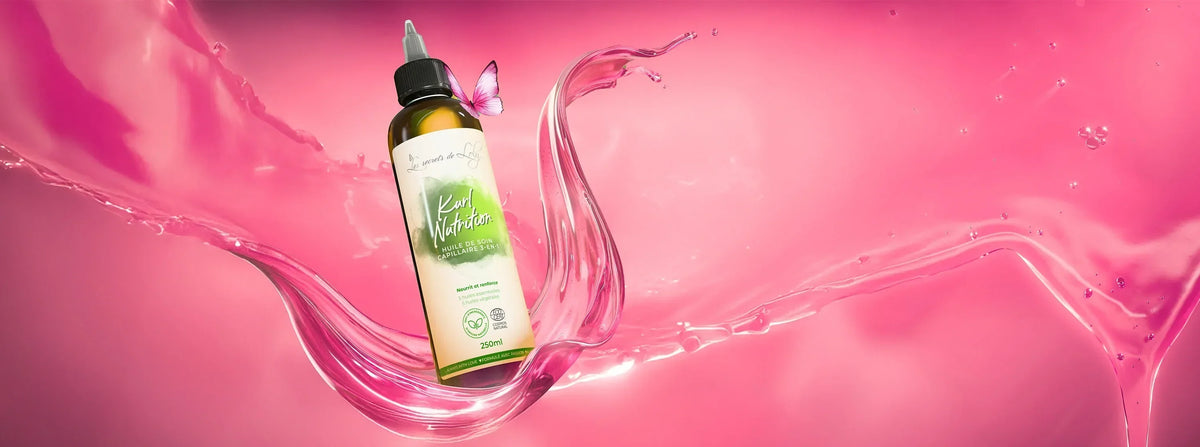
Oil then seals the hydration on the surface of the strand, forming a protective film that slows water evaporation. This is where Kurl Nutrition, our concentrated anti-breakage oil, comes in: a few drops warmed between your palms, pressed onto the lengths and ends.
C — Cream (nourishment + definition)
Cream comes last to nourish, add body and kick-start definition. For tight coily hair, Magic Twist is the go-to nourishing cream, particularly suited to protective styles.
The LCO method: Liquid, Cream, Oil
LCO swaps the last two steps: after the leave-in (L), you apply the cream (C), then finish with the oil (O). The principle is the same — layer hydration then seal it — but the cream penetrates the already-hydrated strand directly, and the oil locks everything in on the surface.
LOC or LCO: how to choose based on your porosity?
This is the key question, and the answer depends largely on your hair's porosity — that is, the cuticle's ability to absorb and retain water.
Low porosity → go for LCO
Low-porosity hair has tightly closed cuticles: it repels water and treatments struggle to penetrate. If you apply oil too early (as in LOC), it forms a barrier that stops the cream from getting in. The LCO method is therefore more suitable: the cream enters the strand while it's still "open" from the moisture, then the oil finishes things off.
Often concerns: wavy hair (type 2) and some fine curly hair (3A/3B).
High porosity → go for LOC
High-porosity hair has raised cuticles: it absorbs water quickly but loses it just as fast. You therefore need to seal quickly after the leave-in, which is why oil goes in second position (LOC). The cream then dresses and defines.
Often concerns: loose coily hair (3C/4A), tight coily hair (4B/4C), hair in transition, coloured or bleached hair.
Medium porosity → try both
Both methods can work. Test each over two weeks, observing moisture retention, softness and definition on the third day of styling.
How to apply the LOC or LCO method step by step
- Wash your hair with a shampoo suited to your texture: Perfect Match for fine hair, Perfect Clean for thick hair.
- Detangle under water, from ends to roots, with a conditioner (Cream Conditioner or Pink Paradise).
- Divide your hair into 4 sections on very wet hair (squeezed with a microfibre towel, not dried).
- L: apply your leave-in section by section, smoothing from roots to ends.
- O or C (depending on your porosity): apply the next step using the praying hands technique (flat hands gliding along the section).
- C or O: finish with the last step, then scrunch (press your curls towards the scalp) to activate definition.
- Let it air-dry or use a diffuser.
For more detail on the right techniques, see our guide how to apply your products on textured hair.
FAQ — Your questions about the LOC and LCO method
How often should you apply the LOC method?
The LOC method is done at every styling session after washing, so 1 to 2 times a week depending on your routine. Between two washes, you can refresh your curls with a hydrating mist.
Can you do the LOC method every day?
No, it's neither necessary nor recommended. Layering 3 coats of product daily would weigh the strand down. Prefer a light refresh between two full routines.
Does the LOC method work on wavy hair?
Yes, but sparingly: wavy hair weighs down easily. Favour LCO with light products (Kurl Potion as L, a light cream as C, just a few drops of oil as O).
What's the difference between the LOC method and a classic routine?
A classic routine often applies leave-in + styler. LOC/LCO adds a third sealing step that extends hydration over several days — ideal for high-porosity textures or styles that need to last a long time.
How do I know if my LOC method is working?
On the third or fourth day, your curls should stay soft, defined and hydrated to the touch. If they turn rough by the next day, try the other method (LCO) or increase the amount of product at the "sealing" step.
Not sure of your porosity or your ideal routine? Take our free hair diagnosis: in just a few minutes, you'll know exactly which method and which products are right for your hair.


